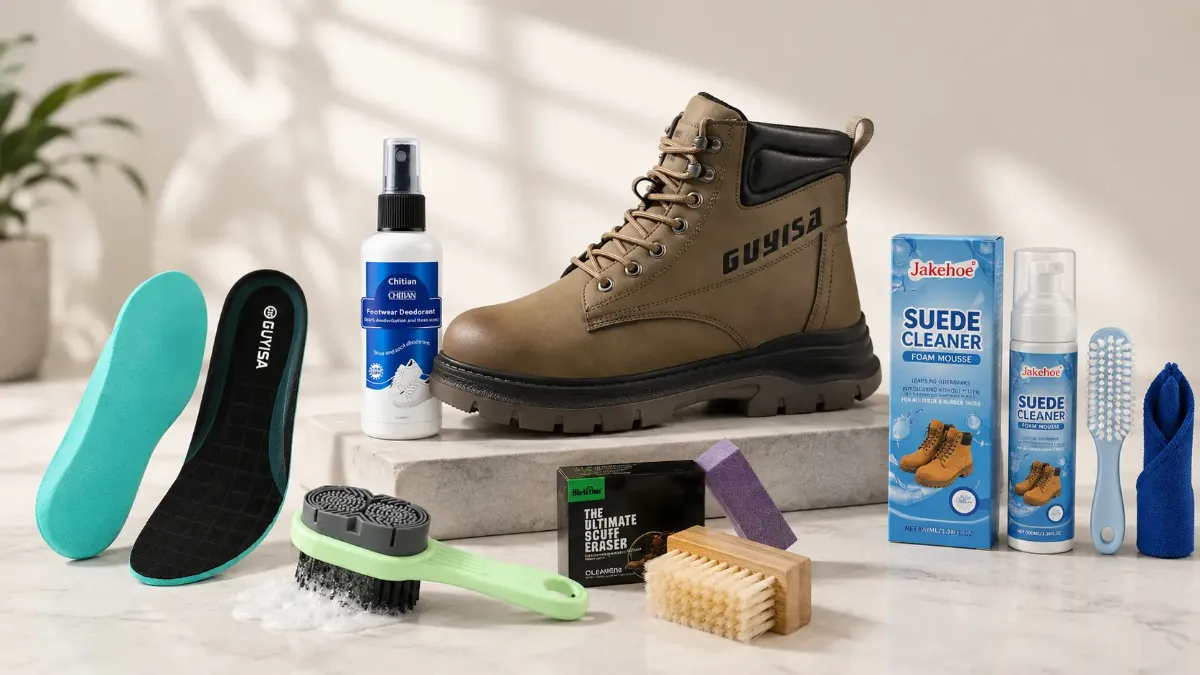
Guyisa Safety Shoes Care Guide: How to Clean Every Material
Safety shoes are built for punishment — dust, mud, oil, concrete floors, mine sites, farms, workshops, kitchens, hospitals, and long shifts. But “built tough” does not mean “clean any way you want.”
The wrong cleaning method can damage the material, weaken stitching, crack leather, fade colour, trap moisture in mesh, or make the shoe age faster than it should. A safety shoe protects your foot. Your job is to protect the shoe.
This guide breaks down how to clean Guyisa safety shoes by material — suede, microfiber, cowhide leather, pigskin leather, KPU, fly-woven fabric, steel mesh, sandwich mesh, and mixed-material safety shoes.
The Rule Before Everything Else
Do not soak safety shoes or use soap powder.
These two mistakes cause most damage. Safety shoes contain reinforced toe caps, midsoles, adhesives, inner linings, padded collars, anti-slip soles, and protective layers that should not sit in water. Soap powder can also damage materials, leave white marks, and cause discolouration.
For most Guyisa safety shoes, the correct approach is simple:
- Let mud dry first
- Tap off loose dust
- Brush gently
- Spot clean stains
- Use the right cleaner for the upper material
- Wipe off cleaner properly
- Dry in the shade
Never rush the process with direct sun, a heater, open fire, hair dryer, or machine wash. Heat can crack, shrink, harden, weaken, or deform shoe materials.
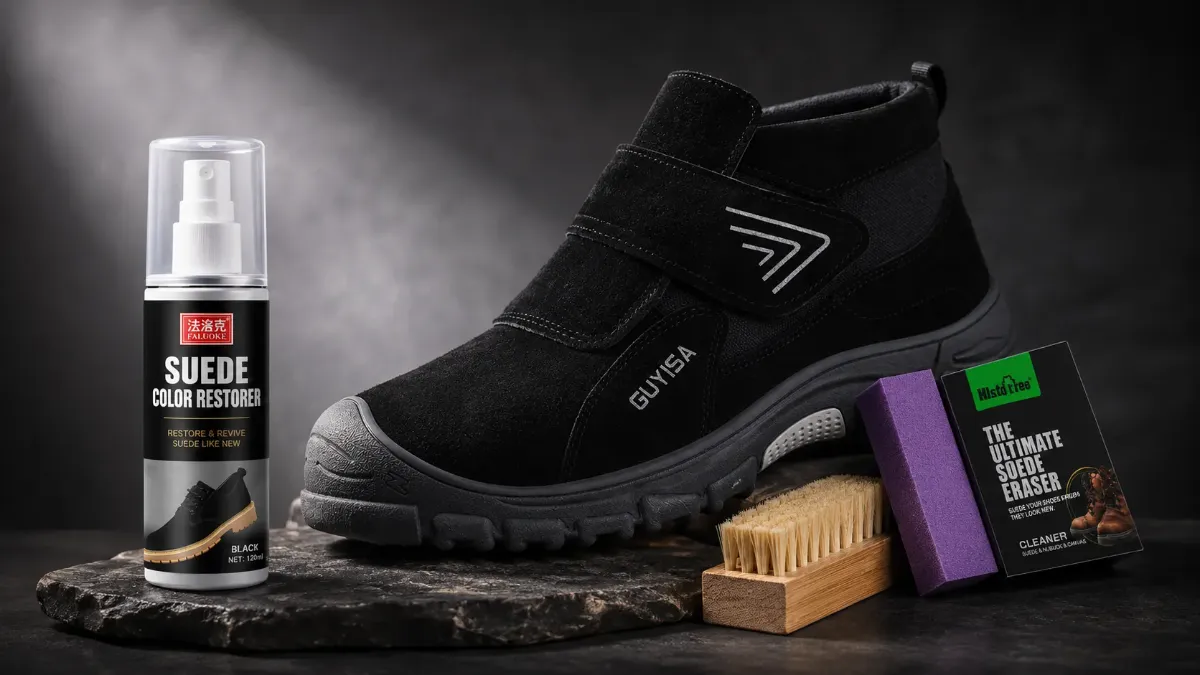
How to Clean Suede Safety Shoes
Suede safety shoes look good, but they need dry care. Water, soap, and hard scrubbing can flatten the nap and leave stains.
Home care trick:
- Let mud dry first
- Tap off dust
- Brush gently with a soft dry brush
Best method: Use a soft suede brush and suede eraser for normal dirt. For heavier stains, use a suede or nubuck cleaner. If the colour has faded, use suede colour restorer. Finish with suede waterproof spray to help reduce future staining.
Do not do this: No soaking. No washing with soap. No machine wash. No hard brush. No leather polish. No direct sun.
Suede is common on welding safety shoes because it resists sparks and heat better than synthetic uppers. If you weld, the AW7203 welder’s safety shoe is a suede model built for exactly that — and it needs the dry-care method above, not soap and water.
How to Clean Fly-Woven Safety Shoes
Fly-woven fabric is breathable and comfortable, but it should not be scrubbed aggressively. The woven surface can trap dust, so gentle brushing is better than heavy washing.
Home care trick:
- Let mud dry first
- Tap off dust
- Brush gently with a soft dry brush
- For stains, use a clean damp cloth dipped in diluted liquid soap
Best method: Use a soft brush and dry microfiber cloth. For stains, use a lightly damp cloth with mild sneaker cleaner. Clean gently and let the shoe air dry in the shade.
Do not do this: No soaking. No soap powder. No machine wash. No bleach. No hard brush. No leather polish. No direct sun.
Fly-woven uppers are used on lighter, more breathable models like the AH1103 high-top boot — ankle support with a fabric upper that stays cool on long shifts. Brush it. Do not scrub it.
How to Clean KPU Safety Shoes
KPU uppers are common on modern safety shoes because they are flexible, tough, and easy to wipe. The raised patterns and overlays need gentle cleaning around the edges.
Home care trick:
- Let mud dry first and tap off dust
- Wipe lightly with a clean damp cloth
- For stains, use a clean microfiber cloth dipped in diluted liquid soap
Best method: Use a soft cloth and mild sneaker cleaner. Clean gently around raised patterns, then wipe off cleaner with a clean damp cloth. Air dry in the shade.
Do not do this: No soaking. No machine wash. No bleach. No hard brush. No leather polish. No direct sun.
How to Clean Microfiber Safety Shoes
Microfiber safety shoes are easier to clean than suede, but they still need gentle handling. Too much water or aggressive scrubbing can damage the finish.
Home care trick:
- Let mud dry first and tap off dust
- Wipe lightly with a clean damp cloth
- For stains, use a clean microfiber cloth dipped in diluted liquid soap
Best method: Use a soft brush and clean microfiber cloth. For heavy stains, use mild sneaker cleaner. Wipe off soap or cleaner with a clean damp cloth, then air dry in the shade.
Do not do this: No soaking. No soap powder. No machine wash. No bleach. No hard brush. No leather polish. No direct sun.
How to Clean Cowhide Leather Safety Shoes
Cowhide leather is tough, but it can dry out, crack, or lose its finish if cleaned badly. Leather needs cleaning and light conditioning.
Home care trick:
- Let mud dry first and tap off dust
- Wipe with a clean, slightly wet cloth
- For marks, use diluted liquid soap
Best method: Use leather cleaner or mild soap. Wipe off soap with a clean damp cloth. Let the shoes dry in the shade. Apply a little leather polish or cream, then rub gently with a soft dry cloth.
Do not do this: No soaking. No soap powder. No machine wash. No bleach. No strong chemicals. No hard brush. No direct heat or sun.
How to Clean Pigskin Leather Safety Shoes
Pigskin leather is softer and more textured than smooth cowhide leather. Treat it closer to suede or nubuck, not like polished leather.
Home care trick:
- Let mud dry first and tap off dust
- Brush gently with a soft dry brush
- For marks, wipe lightly with a damp cloth
Best method: Use a soft brush and clean microfiber cloth. For stains, use neutral suede or nubuck cleaner. Clean gently and avoid making the shoe too wet. Let the shoes dry in the shade.
Do not do this: No soaking. No soap powder. No machine wash. No bleach. No strong chemicals. No oil. No direct heat or sun.
How to Clean Steel Mesh Safety Shoes
Steel mesh safety shoes need two things: gentle cleaning and proper drying. The mesh should not be attacked with wire brushes or left wet.
Home care trick:
- Let mud dry first and tap off dust
- Brush gently with a soft dry brush
- Wipe with a clean slightly damp cloth
Best method: Use a soft brush and clean microfiber cloth. For stains, use mild soap in water or neutral mild sneaker cleaner. Wipe off cleaner with a clean damp cloth, then dry the mesh well with a soft dry cloth.
Do not do this: No soaking. No soap powder. No machine wash. No bleach. No strong chemicals. No wire brush. No direct heat or sun.
How to Clean Sandwich Mesh Safety Shoes
Sandwich mesh is a layered textile mesh used for breathability and comfort. It cleans best with soft brushing and light spot cleaning.
Home care trick:
- Let mud dry first and tap off dust
- Brush the mesh gently with a soft dry brush
- Wipe lightly with a damp cloth
Best method: Use a soft brush and clean microfiber cloth. For stains, use mild soap in water or mild sneaker cleaner. Wipe off soap with a clean damp cloth and let the shoes dry in the shade.
Do not do this: No soaking. No soap powder. No machine wash. No bleach. No strong chemicals. No hard brush. No direct heat or sun.
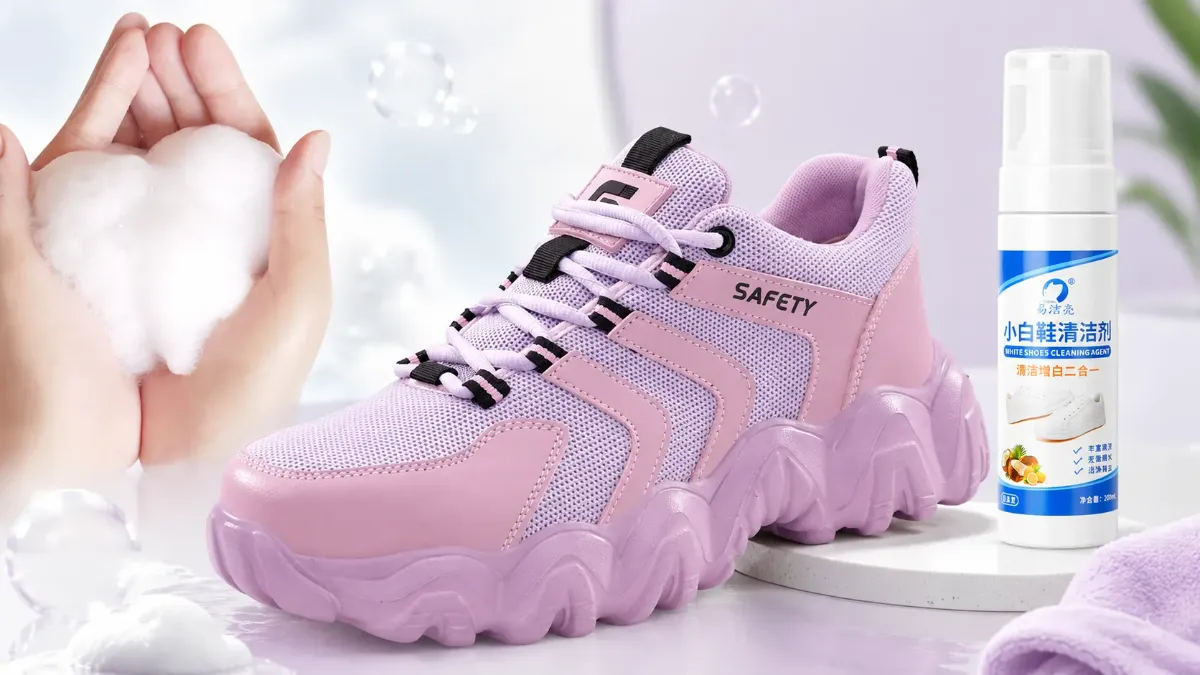
How to Clean Microfiber + Fly-Woven Safety Shoes
Some Guyisa safety shoes combine microfiber panels with fly-woven fabric. Do not clean the whole shoe as if it is one material. Treat each section properly.
Home care trick:
- Let mud dry first and tap off dust
- Wipe microfiber with a damp cloth
- Brush fly-woven fabric gently
- For stains, wipe with diluted liquid soap using a clean microfiber cloth
Best method: Use a soft brush and clean microfiber cloth. For stains, use neutral mild sneaker cleaner. Wipe microfiber gently. Brush the fabric sections lightly. Wipe off cleaner with a clean damp cloth, then dry the fly-woven fabric in the shade.
Do not do this: No soaking. No soap powder. No machine wash. No bleach. No strong chemicals. No hard brush. No direct heat or sun.
How to Clean Microfiber + Steel Mesh Safety Shoes
Microfiber and steel mesh can share the same cleaner, but they should not be handled the same way. Microfiber needs wiping. Steel mesh needs light brushing and proper drying.
Home care trick:
- Let mud dry first and tap off dust
- Wipe microfiber with a damp cloth
- Brush steel mesh gently with a soft brush
Best method: Use a soft brush and clean microfiber cloth. For stains, use neutral mild sneaker cleaner. Wipe microfiber gently. Brush mesh lightly. Wipe off cleaner with a clean damp cloth, then dry steel mesh well with a soft dry cloth.
Do not do this: No soaking. No soap powder. No machine wash. No bleach. No strong chemicals. No wire brush. No direct heat or sun.
For dusty workdays: brush or wipe after use and store dry.
Quick Care Reference Table
| Material | Best Cleaner | Best Tool | Main Warning |
|---|---|---|---|
| Suede | Suede/nubuck cleaner | Suede brush + eraser | Do not use soap or leather polish |
| Fly-woven | Mild sneaker cleaner | Soft brush + microfiber cloth | Do not scrub hard |
| KPU | Mild sneaker cleaner | Soft cloth | Clean gently around raised patterns |
| Microfiber | Mild sneaker cleaner | Soft brush + microfiber cloth | Do not soak |
| Cowhide leather | Leather cleaner or mild soap | Damp cloth + soft dry cloth | Finish with light polish or cream |
| Pigskin leather | Neutral suede/nubuck cleaner | Soft brush | Do not use oil |
| Steel mesh | Neutral mild sneaker cleaner or mild soap | Soft brush + dry cloth | Dry mesh properly |
| Sandwich mesh | Mild soap or mild sneaker cleaner | Soft brush | Do not machine wash |
| Microfiber + Fly-woven | Neutral mild sneaker cleaner | Cloth + soft brush | Wipe microfiber, brush fabric |
| Microfiber + Steel Mesh | Neutral mild sneaker cleaner | Cloth + soft brush | Wipe microfiber, dry steel mesh well |
What Not to Do to Any Safety Shoe
Some mistakes damage almost every safety shoe material.
Avoid:
- Soap powder
- Machine washing
- Soaking in buckets
- Bleach
- Strong detergents
- Hard scrubbing
- Wire brushes
- Direct sun drying
- Drying near fire, heaters, or hot metal surfaces
- Leather polish on suede, mesh, fly-woven or microfiber
- Oil on pigskin leather or suede-type finishes
A safety shoe can survive rough work. It cannot survive bad cleaning forever.
Foot Deodorant, Shoe Sprays and Care Accessories
Long shifts create sweat, odour, and moisture inside safety shoes. That is normal — especially for workers in mining, construction, farming, hospitality, healthcare, and manufacturing. Armor Sole also sells foot and shoe deodorant sprays to help keep shoes fresher between wears.
We also stock useful shoe-care accessories such as shoe cleaners, soft brushes, microfiber cloths, insoles, shoe horns, suede brushes, polish/cream for leather shoes, and other basic care tools. These accessories are not cosmetic extras. They help your safety shoes last longer, stay more comfortable, and remain presentable for work.
If you are buying Guyisa safety shoes, add the right care accessories at the same time. A good brush, cleaner, deodorant spray, and spare insole can extend the practical life of the shoe and make daily use much more comfortable.
Browse all shoe-care accessories →
When to Replace Safety Shoes
Cleaning helps, but it does not make a worn-out safety shoe safe again.
Replace your safety shoes if:
- The sole is smooth or badly worn
- The upper is torn
- The toe area is damaged
- The shoe lets in water where it should not
- The midsole feels compromised
- The shoe has been hit hard by a heavy object
- The anti-slip grip is no longer reliable
- The shoe causes pain because the inner support has collapsed
Safety shoes are PPE. Once the protection is compromised, the shoe has done its job and needs replacing. Not sure which model replaces yours? Browse the full Guyisa range or check our shoe size guide before you order.
DISCLAIMER
These are general guidelines. Materials and finishes vary, so identify your shoe’s material correctly and test any cleaner on a hidden area first. Armor Sole (Pvt) Ltd accepts no liability for damage, loss of protective performance or injury arising from how footwear is cleaned, dried, stored or used. Damage from improper cleaning is NOT covered by warranty.
Browse the full Guyisa range and care accessories at Armor Sole →
Armor Sole is Zimbabwe’s exclusively authorized Guyisa agent. CE certified, EN ISO 20345 compliant. $5 nationwide delivery. Same-day in Harare.